
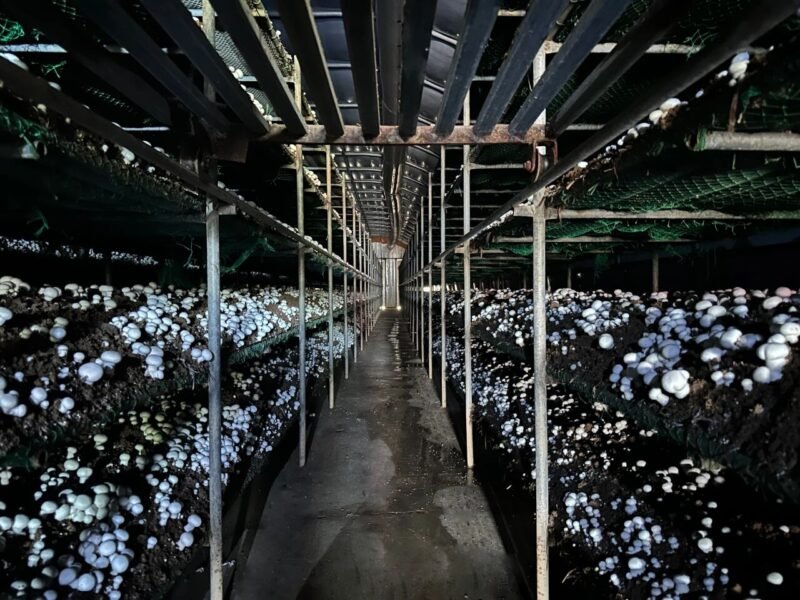
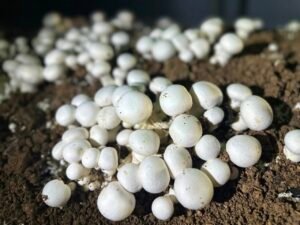
Agaricus bisporus, also known as white button mushroom, boasts plump, tender flesh, rich nutrition, and a delicate, delicious taste, making it a favorite among consumers. Its nutritional value is 4–12 times that of ordinary vegetables and fruits. Rich in vitamins B1, B2, PP, D, as well as niacin, nucleotides and other nutrients, it is hailed as a health-care food and the “King of Vegetarian Ingredients”. Moderate consumption helps enhance immunity, promote digestion, resist oxidation and protect heart health. Agaricus bisporus has rather stringent requirements for its growing environment; it thrives in a medium-temperature, high-humidity, weakly alkaline, well-ventilated environment away from strong light.
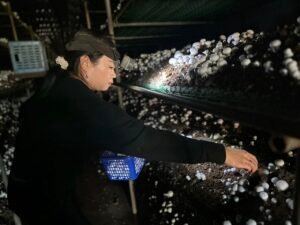
Being delicate in nature, Agaricus bisporus is extremely sensitive to changes in temperature and humidity. Traditional cultivation has long been dependent on the whims of nature, resulting in unstable yield and quality. However, at the Haoran Planting and Breeding Base in Yangwa Village, Lintan Town, mushroom farmers only need to tap on their mobile phones to precisely regulate the temperature and humidity of mushroom sheds, achieving industrialized and constant-temperature cultivation. Technology has made mushroom growing efficient and controllable.
The base relies on the “Cooperative + Company + Farmer” model to cultivate leaders of collective economy, driving enterprises and farmers to form an industrial community with shared risks and benefits. Mushroom farmers are no longer just producers, but also participants and beneficiaries of the industry.
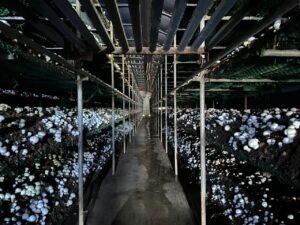
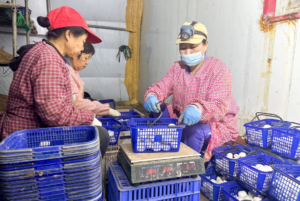
Former poverty-stricken households are the priority beneficiary group. Aunt Yang said, “I come to work at the base whenever there are jobs available—such as inoculating spawn and picking mushrooms. I can earn over 100 yuan a day and more than 10,000 yuan a year. The work is easy, and I can still take care of the farm work at home. I’m very satisfied!”
The base has established a circular agriculture model of “cultivation driving breeding, and breeding boosting cultivation”, closely integrating planting and breeding industries. Relying on the Agaricus bisporus industry as the core “vine”, it has extended and driven the development of supporting industries such as grain production, breeding, comprehensive utilization of straw, and cold chain transportation, effectively activating the rural economy.
In collaboration with public partners, Business connects local businesses and job-seeking residents with government-funded resources.