
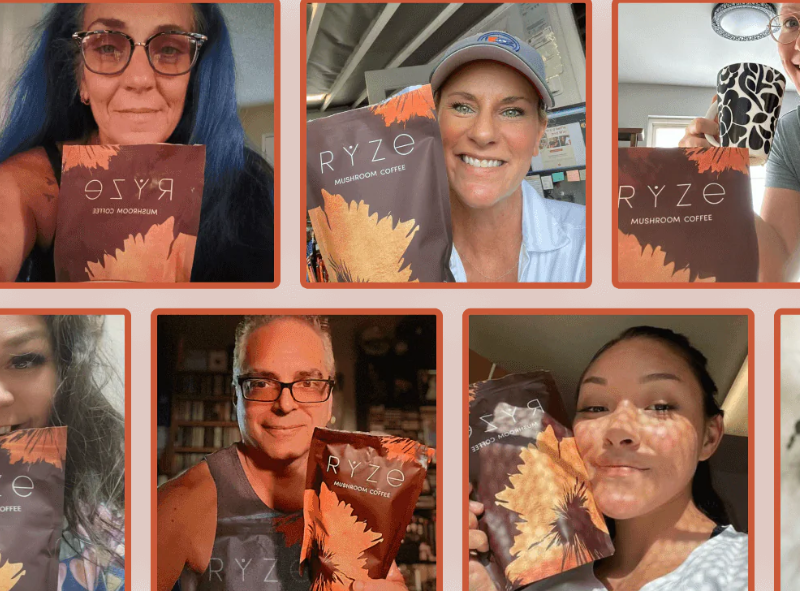
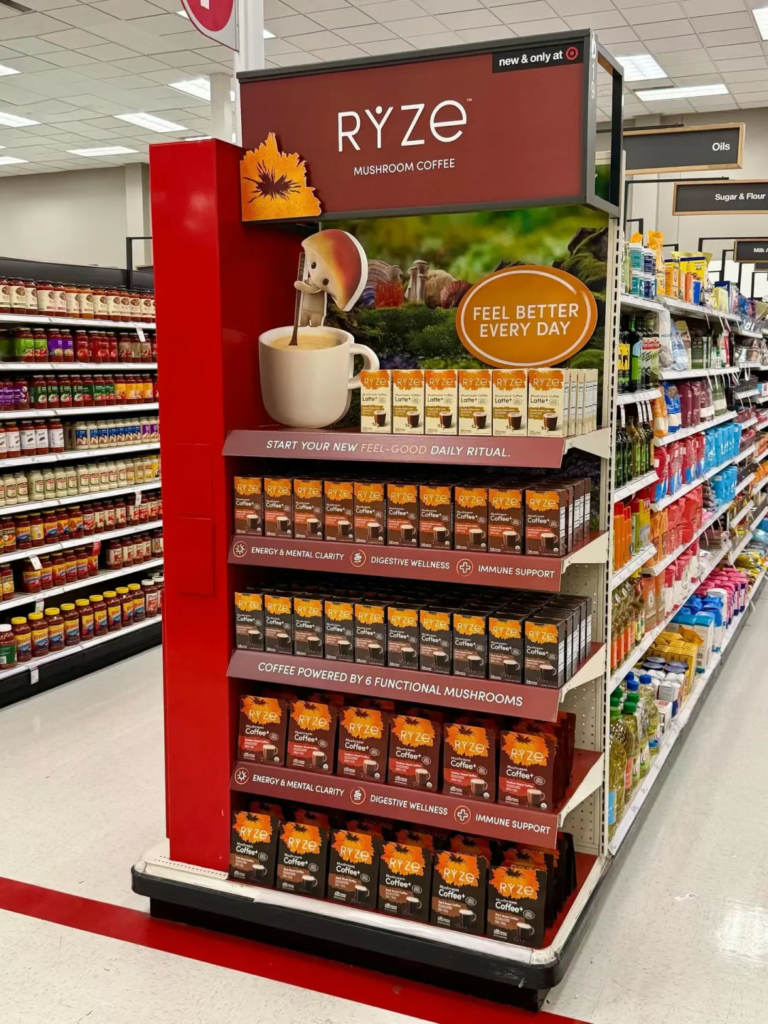
Mushroom coffee first emerged in the 1940s, yet it took more than 75 years to become the “next big trend” in the beverage industry. In 2025, Ryze, a popular coffee alternative brand, raked in an estimated revenue of over $300 million through online sales alone. Now, its products have entered more than 1,900 Target stores across the U.S., gearing up to tap into the mass market.

Ryze’s mushroom coffee is blended from six types of organic mushrooms sourced from California and Nevada, paired with Mexican Arabica coffee beans. According to conservative estimates by Forbes, the company’s annual revenue exceeded $300 million last year, marking a 50% year-on-year growth.
Headquartered in Boston, Ryze was co-founded in 2020 by CEO Rashad Hussein and CMO Andrea Werner. Their original vision was to create a “healthier, immunity-boosting alternative to traditional coffee”.
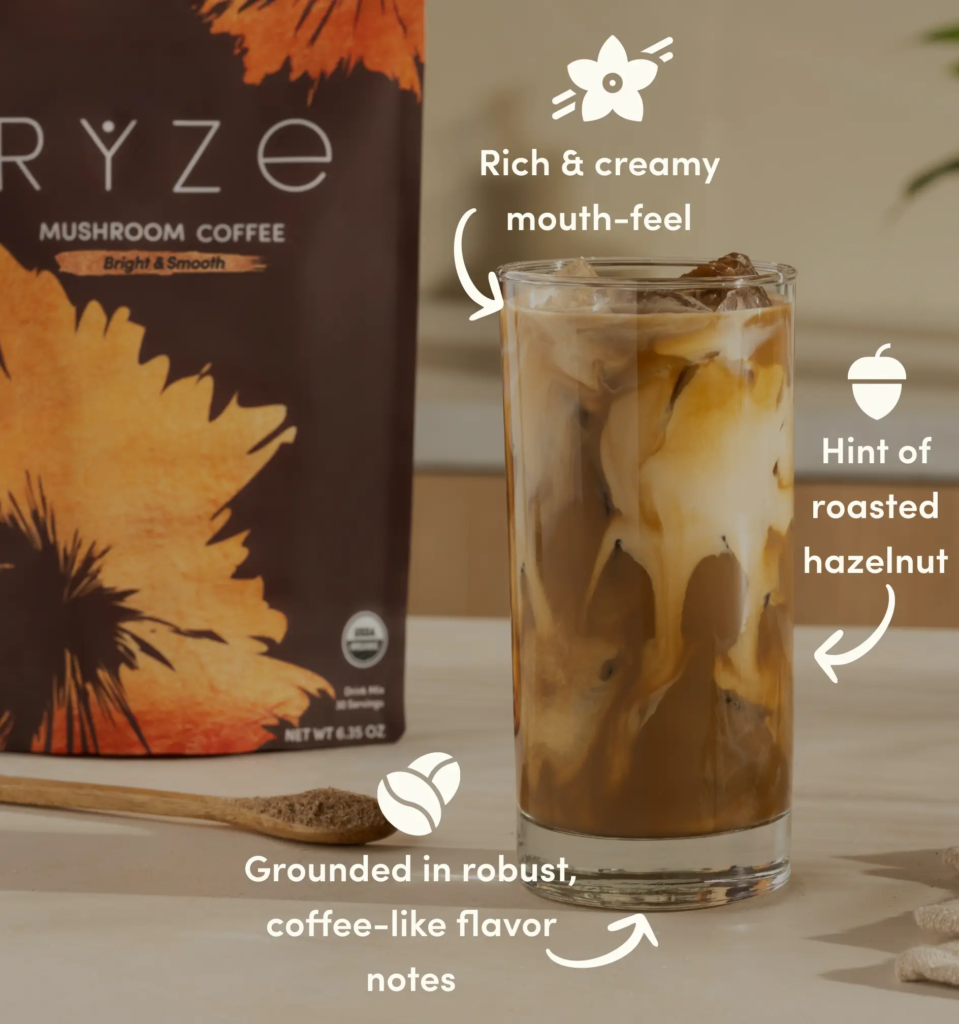
Over the past five years, millions of consumers have purchased this low-caffeine beverage online, with many opting for subscription services priced between $80 and $100 per month. A 6-ounce bag retails for $45. Ryze also boasts a private Facebook group with around 500,000 members, a testament to its strong user loyalty.
Meanwhile, mushroom coffee brands are driving the growth of the functional beverage market.
Claiming to offer health benefits such as immunity enhancement and digestion promotion, this market reached **$50 billion** in global retail sales last year and is projected to hit $62 billion by 2027. Hussein and Werner stated that choosing Target as their first offline retail partner will help Ryze “meet market demand on a large scale and bring functional coffee to a broader mainstream audience”.
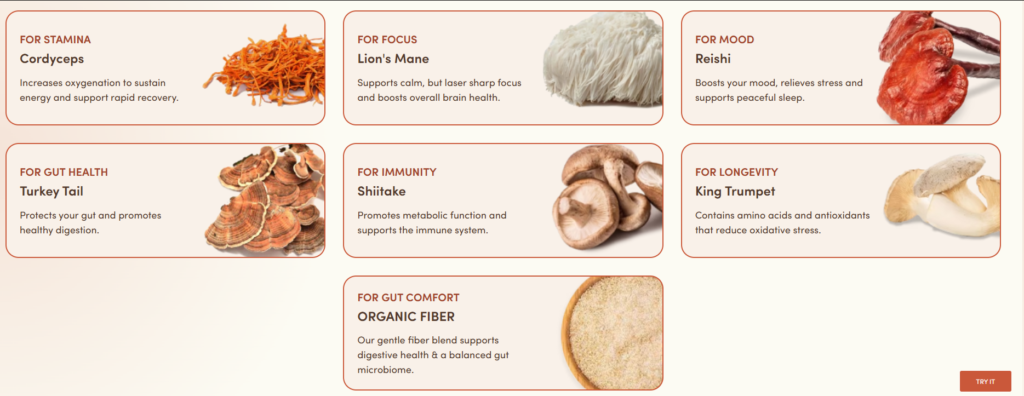
Ryze’s mushroom formula includes lion’s mane, cordyceps, reishi, turkey tail, shiitake, and king oyster mushrooms. The brand claims this blend boosts energy, enhances mental clarity, and improves gut health.
Forbes estimates that if Ryze were to be acquired, its valuation could double its annual revenue, reaching $600 million. However, Hussein said he is not in a hurry to sell the company, noting that Ryze’s core goal is to build long-term brand loyalty.
Raised in Boston by immigrant parents from Bangladesh, Hussein developed a keen interest in nutrition while studying economics at Harvard University. This led him to his first career role in brand management at Kraft Heinz, where he oversaw coffee brands including Maxwell House.
Werner, a close friend from Harvard who majored in applied mathematics, graduated alongside him in 2016. Three years later, Hussein left Kraft Heinz to launch his own brand, and Werner joined him as a co-founder.
“We used to be total coffee addicts, drinking 10 to 20 cups a day,” Hussein recalled. “But we both knew we needed a better alternative. When we were looking for adaptogens, herbs, and natural energy sources, we stumbled upon mushrooms.”
Ryze was launched in June 2020, generating a mere $120,000 in revenue in its first year.
In 2021, the pair secured $1 million in pre-seed funding from PS27 Ventures and New York-based Reign Ventures. By the end of 2021, the company’s revenue had surged to $2.9 million.
When Hussein was named to the Forbes 30 Under 30 list in the Food & Beverage category in 2023, Ryze had amassed over 30,000 customers and achieved nearly **$18 million in revenue in 2022**, with an additional $2 million in funding from PS27 Ventures, River Bay, and Chicago-based 11 Tribes.
The company’s revenue continued to soar. After securing another **$2.15 million in funding** from Connecticut-based Valency Capital in January 2023, its revenue skyrocketed tenfold, reaching an estimated $100 million in 2023.
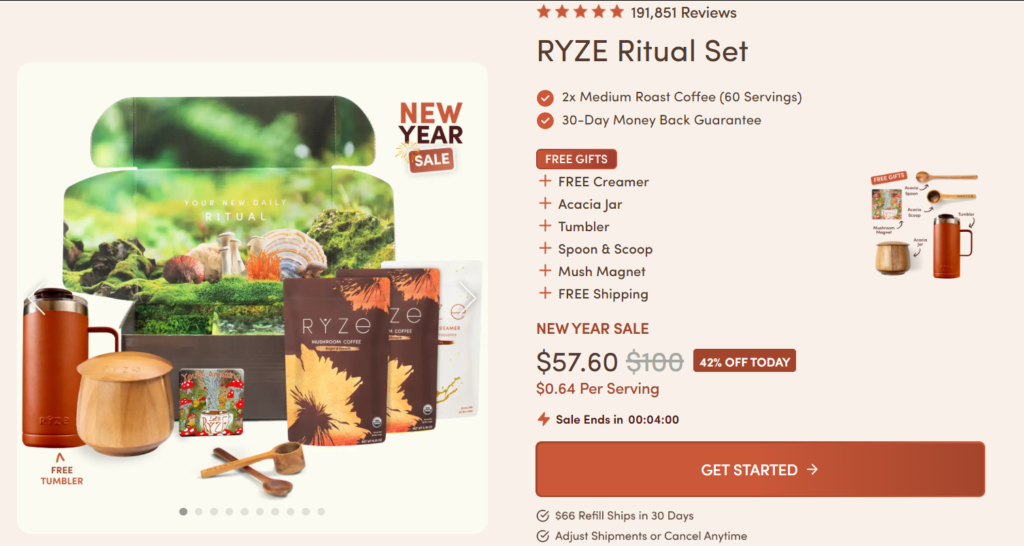
In 2024, Ryze maintained its robust growth trajectory, launching on Amazon and quickly becoming the top-selling coffee alternative brand on the platform. Forbes estimates that Ryze’s revenue exceeded $200 million in 2024.
However, Ryze’s major competitors are also experiencing explosive sales growth.
Founded in 2021, Everyday Dose is projected to hit **$100 million in revenue in 2025**. Mud\Wtr entered Target’s retail channels in early 2024, with an estimated revenue of $60 million last year. Having sold mushroom coffee drinks in various flavors (without actual coffee ingredients) since 2018, Mud\Wtr launched a new coffee-based beverage in December last year.
Another competitor, Four Sigmatic, introduced its mushroom coffee brand in 2012 and now boasts an estimated annual revenue of over $50 million. Headquartered in Los Angeles, the brand is one of the best-selling coffee brands at Whole Foods, Sprouts, and Amazon. It has secured shelf space in hundreds of new retail stores and plans to roll out its products in these outlets later this year.
Four Sigmatic CEO Tero Isokauppila noted that some investors, distributors, and industry consultants have questioned whether mushroom coffee is “a passing fad or a bubble about to burst”.
Hussein and Werner are confident in their ability to stand out in the competition. They point to Ryze’s loyal customer base, who have integrated the beverage into their daily lives.
RYZE mushroom coffee is blooming and bearing fruit in the United States, representing the industrial upgrading of consumer products. The new idea of mushroom+coffee represents health and vitality. We believe that RYZE’s brand influence can continue to grow.

Similarly, in the Eastern world, technology leads industrial upgrading, and changes in the industrial chain will inevitably bring new vitality and markets to the single mushroom economy. AISanful is one of them. AISanful (AISF) represents the most advanced technological productivity of mushrooms in the world and will inevitably lead the development of the next generation mushroom industry in Bangladesh. Let’s look forward to it together!