
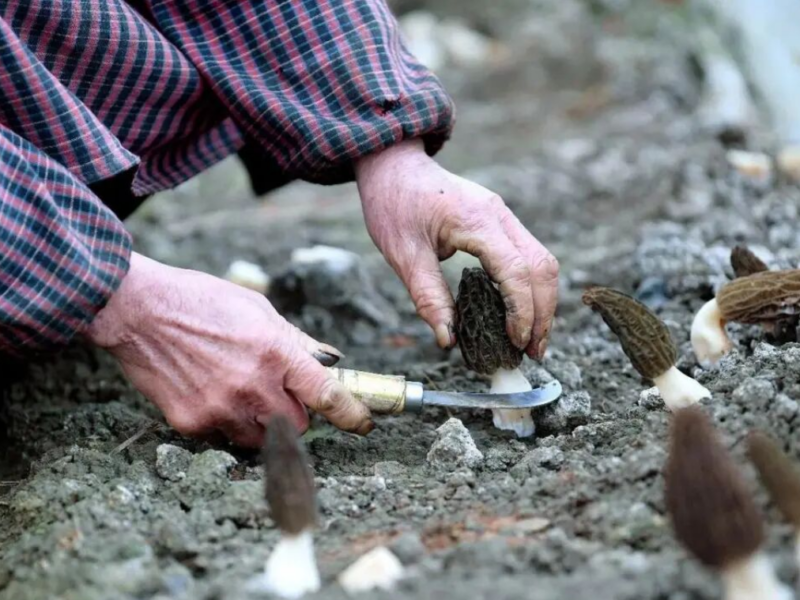
As the Spring Festival approaches, Zhaojia Town of Jintang County in Chengdu, China’s largest morel trading market, has entered its peak production and sales season. Driven by the warm winter, the first batch of fresh morels has hit the market to capture the “freshness” opportunity, with the daily trading volume of fresh mushrooms reaching 1 to 5 tons locally. At present, the market gathers fresh mushrooms from major producing areas including Guizhou, Chongqing and surrounding areas of Chengdu, and its annual trading volume has stabilized at over 8 billion yuan for three consecutive years.
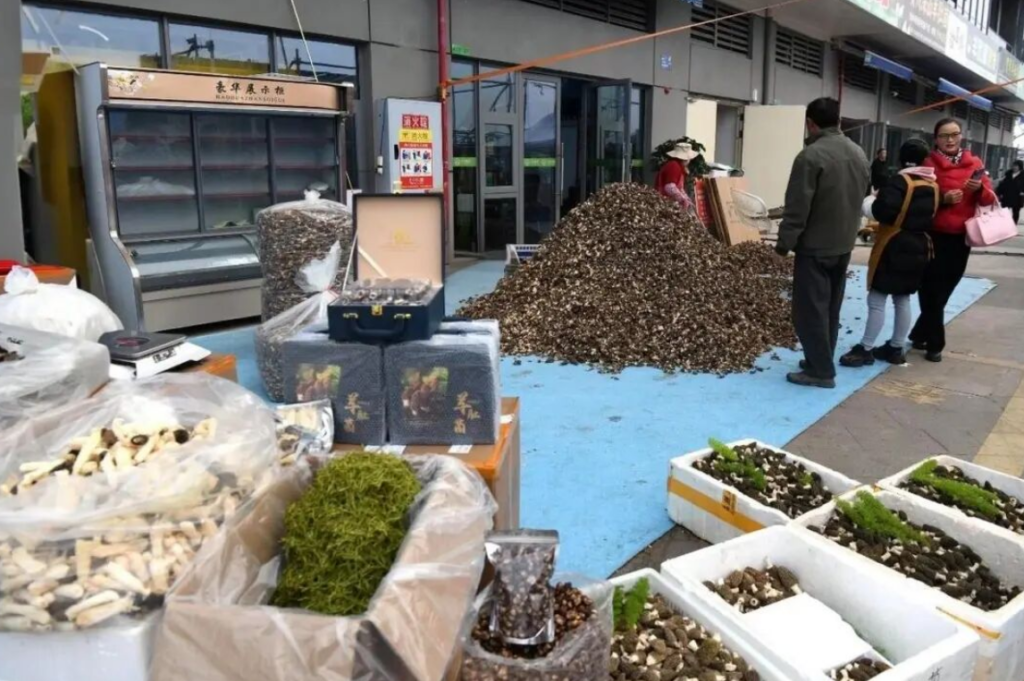
Meanwhile, the Tianfu Fungi Capital Trading Center — the first large-scale modern trading complex in Southwest China focusing on the edible fungi industry — has been put into operation. It is driving the upgrading of this ten-billion-yuan industry toward standardization and branding, enabling the “first bite of freshness” in the Spring Festival to efficiently reach dining tables across the country directly from the farmland.
1. Mass Maturation Expected Around the Spring Festival
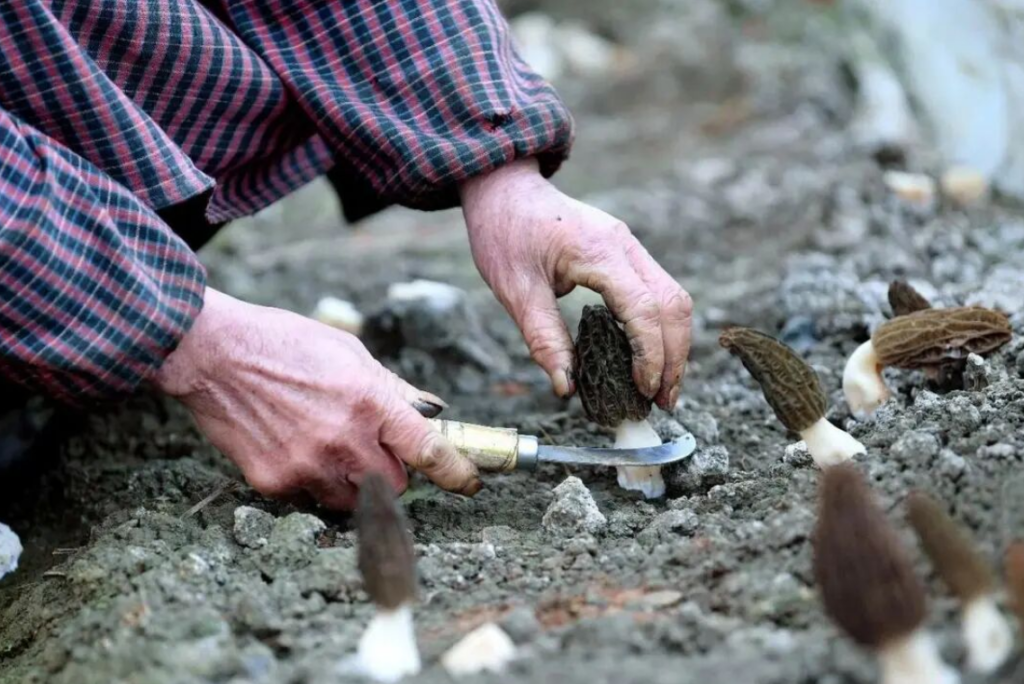
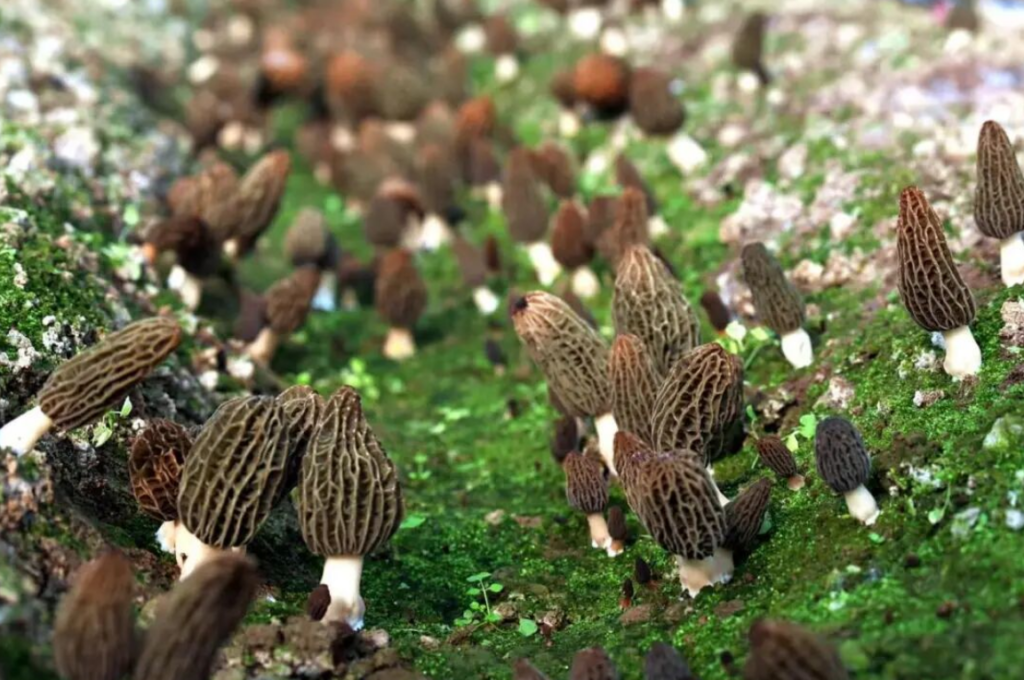
In the early morning, inside the morel greenhouses in Zhaojia Town, clusters of grayish-brown mushrooms, like small opened umbrellas, peek out neatly from the soil ridges. Yi Jianzhi, a local grower, is guiding villagers in harvesting while carefully monitoring the temperature and humidity inside the greenhouses. She notes that this is the first batch of fresh morels in Jintang, sown in November last year and timed to go on the market before the Spring Festival. Based on the current growth, the expected yield per mu is 300 to 800 kilograms, and the harvesting period will last until March.
When the first batch of fresh morels arrived at the trading market in Zhaojia Town, buyers from across the country had already been waiting for a long time. A relevant person in charge of Zhaojia Town stated that since fresh morels hit the market earlier this month, the daily trading volume of fresh mushrooms in the town has reached approximately 1 to 5 tons, and a larger batch of morels will mature around the Spring Festival.
It is reported that the cultivation scale of morels in Jintang County has reached nearly 30,000 mu (about 2,000 hectares). In recent years, local authorities have continuously innovated cultivation models, implemented the mode of “centralized bag production and household-based planting”, and gradually shifted from “relying on the weather for harvest” to “scientific and technological mushroom cultivation”.
2. Morels from Jintang Make Their Way to Dining Tables Across the Country
As the Spring Festival draws near, the trading market in Zhaojia Town is bustling with activity, where merchants are busy sorting, packaging and negotiating deals. This market serves not only as a display window for local mushrooms, but also as a national distribution hub for morels — in addition to local products from Jintang, it also sources fresh morels from Guizhou, Chongqing, and neighboring areas such as Zhongjiang and Jianyang.
Recently, the daily retail volume of fresh morels has reached about 200–300 kilograms, mainly destined for Beijing, Shanghai and other cities. With the rising demand for festival gift boxes, the company has just received an order for 300 boxes of morel Spring Festival gift boxes, which are jointly launched with local pharmaceutical enterprises.
Currently, the annual trading volume of morels in Jintang County exceeds 8 billion yuan, accounting for 90% of the national total. In May 2025, the Tianfu Fungi Capital Trading Center — the first large-scale modern trading complex in Southwest China centered on the edible fungi industry — was officially put into operation. Integrating functions such as trading, warehousing, sorting, primary processing, price index release and exhibition, the center now has a merchant occupancy rate of 80%.